
The Community Remembers Its Parent Tradition
Acts of the ApostlesJewish and Gentile believers form relationships under pressure as the narrative insists on Jewish roots while exposing the harm of anti-Jewish polemic.
increasing Bearing strength in each event
 decreasing
Bearing strength in each eventdecreasingA Jewish Beginning
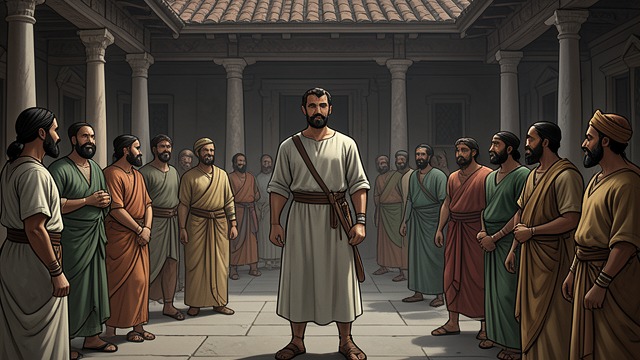
The Church Begins within Israel’s Story
Familiar promises frame the mission
The movement begins in Jerusalem among people shaped by Jewish Scripture, Temple worship, and expectation of restoration. Jesus and the apostles are presented as participants in that tradition.
Gentile inclusion is not replacement
The mission’s expansion is described as an extension of Israel’s vocation to bless the nations. Gentiles enter a story whose roots do not become obsolete when the community grows.
Samaritans Become Neighbors
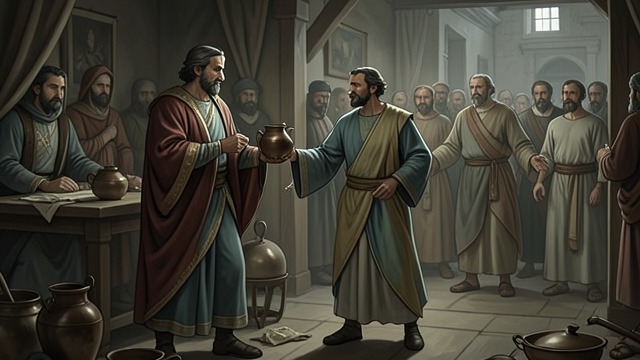
An Old Division Is Crossed
A related community responds
Samaritans share important traditions with Jews while maintaining a distinct religious community. Philip’s welcome and the apostles’ visit make the boundary porous.
Difference remains present
The story does not require Samaritans to become culturally identical to Jews. Their participation challenges contempt while preserving the historical specificity of the relationship.
Gentile Believers Receive Welcome

Shared Experience Reframes Kinship
The same Spirit is recognized
Peter’s account persuades the Jerusalem believers that Gentiles have received the Spirit as Jewish believers did. Experience changes the terms of the argument.
Respect remains reciprocal
Gentile believers are welcomed, but the story continues to emphasize Jewish origins and the need for Gentiles to live respectfully alongside Jewish members.
The Council Negotiates Difference

Unity Does Not Require Identical Practice
A disputed requirement
Some members argue that Gentiles must undergo circumcision and follow Torah fully. Others testify that God has already welcomed them.
A practical settlement
The council allows Gentiles to join without circumcision while retaining selected practices that support shared life. Its decision is a negotiation within Jewish interpretive traditions, not a simple rejection of Judaism.
The Story Ends with Disagreement

A Conversation Does Not Erase Division
Leaders hear Paul
Paul meets with Jewish leaders in Rome and explains that his imprisonment concerns the hope of Israel. They agree to hear him rather than rely solely on reports about the movement.
The listeners divide
Some are persuaded and others are not. The ending preserves disagreement without making every Jewish person an opponent, while the book’s polemical language still requires critical attention.
In the opening movement from Jerusalem to Pentecost
After Philip preaches in Samaria
After Peter’s return from Cornelius’s house
During the Jerusalem council
During Paul’s final meeting with Jewish leaders in Rome
